

[FUTURE JESS: not sure why this complete post stayed in my drafts. People always seem interested in polyamory journey stories, and this is a good write up! Enjoy]
I’m thinking of writing a book about my polyamory journey and polyamorous life. [Future Jess here, I DID write the book]. I think I’ll go down the “true life story” route as I’m not super experienced with writing fiction. Part of the plan is to re-read my diaries of the time and see what experiences I mention. But before that, I thought I’d reflect on what I can remember before I re-read the diaries.
Let’s limit myself to the first year or so of being polyamorous, when I was still dating my partner of six years that I was dating monogamously until then. He consented to my idea of opening our relationship, and we continued dating polyamorously for another year or so before breaking up.
Firstly, I have no memory at all of how I first heard of polyamory and the book I read about it, The Ethical Slut. I thought it must be BiCon, but I slept with more than one person at my first BiCon and must have been non-monogamous already by then. Perhaps the diaries will illuminate for me.
I don’t remember when we did it either. My first BiCon was August 2010, but I think I came out as bi before that, around January 2010? I also thought I had dated no-one for ages while my boyfriend got a new partner quite quickly, but on the timeline I just stated I was at least sleeping with people at BiCon, so, my memories are unreliable. Around that time, after BiCon 2010 we moved from Bath to Bristol, which helps to anchor some of my memories.
My strongest memory of that time is thinking “I can’t believe I’ve been thinking of myself as an adult up until now”. Let me explain.
The Ethical Slut is a book about ethical non-monogamy and in it they encourage a focus on one’s feelings, and developing skills around those feelings. One of the big reasons for this is that when moving from a monogamous mindset to a non-monogamous one, the feeling of jealousy is really big for people, and so the book helps you deal with it.
I am not a very jealous person, but the strategies described in the book seemed appropriate for all kinds of feelings. The thrust of the theory in the book is two-fold: firstly, that you have to sit with, examine and undestand your feelings, it’s your sole responsibility to know how you feel. And secondly that you cannot blame someone else for your feelings. Instead you have to accept that you feelings arise as a result of some set of circumstances, but you cannot change those circumstances.
This is of course the opposite of accepted norms around jealousy in monogamous relationships. If someone feels jealous, then the other partner has to stop whatever activity “makes” that partner feel jealous, whether it’s drinks with opposite-sex colleagues or being flirtatious or even looking at someone walking down the street. IE, if one partner has a feeling, the other partner has to change their behaviour.
The Ethical Slut however says no, the other partner is entitled to carry on doing whatever they’re doing (going on dates or whatnot), they do not have to change their behaviour and the jealous partner has to do the work. They have to sit with their feelings, understand them, give them space, and try some things that will make themselves feel less jealous. And they have to do this on their own. It is not the responsibility of the partner going on dates to help the jealous partner to feel less jealous.
(Sidenote: this is separate from when two people have made an agreement and someone breaks that agreement, this is a betrayal of a boundary and is about trust, rather than jealousy, although jealousy is actually often about trust too).
So, the essence of the practice is to understand that nobody “made” you feel a certain way about something, rather it is you who generated those feelings, and it’s you who has to fix them.
I took this mental process very seriously and while practising it on small examples, such as a collegue annoying me at work, I realised just how much better “owning” your own feelings was, and how childish not being able to do so suddenly seemed.
A website called Polyamorous Misanthrope once had a blog post saying to beware of “Big Babies” – basically people who looked adult but were behaving in a childish way. The phrase Big Babies really stuck with me and now that’s how I describe it. I watched myself being a big baby all the time.
I noticed that when something happened that I didn’t like, my emotions would surge and my mind would fly into a rage, with my inner monologue saying:
“How bad that person is! Thinking/doing such bad things is so bad!”
” How terrible they are! How I hate them! Their bad behaviour is affecting me and they are making me feel bad!”
As soon as I noticed this happening in my mind, as soon as I examined exactly what I was thinking, and how much I blamed someone else for my own feelings, how judgey I was being of them and how patheticly ingratiating I was being about myself, I immediately saw that it was like a two-year-old having a tantrum. Like saying “Mummy, mummy that bad man hurt me and it’s not fair!”
I started to realise that my own worldview was something that I inserted between myself and someone else, and I assumed that other people either followed the same world view, or at least knew it and understood it and should be abiding by it and that when they didn’t abide by it, they were commiting an outrage against me, and that they should be punished for it.
In the process of substituting an unspoken worldview (romantic partners must remain emotionally and sexually exclusive with each other) for a less common, more explicit one (romantic partners are free to engage in other emotional and sexual relations with other people) I really started to see that EVERYTHING I believed was part of an implicit worldview, one that only existed in my mind.
Of course, many of us share a cultural worldview, or at least appear to share it, but since nobody is actually pyschic we can only guess at the rules or expectations in other people’s minds. Much of social life is about becoming skilled at this guess work, and that’s a fine skill to have, but as the Ethical Slut often repeated, no-one really knows what the other person thinks or wants, because no-one is telepathic. At some point we have to go beyond guess work and ask, and honestly express, what we want and need.
This leads to a number of things. One is that actually no-one knows if their behaviour will create good or bad feelings in someone else. Some interactions are about deliberately trying to feel that out, like flirting or fighting, where you’re actively trying to inspire feelings of pleasure or pain, but most interactions are unthinking, going-about-daily-life things. So no-one is really commiting an outrage against you knowingly.
Another is that if someone’s actions inspire some strong feelings in you, it is YOUR worldview that is inspiring those feelings. It is not their behaviour, but your own thoughts that make you have feelings. Other people don’t “make” you feel or think anything, it’s YOU “making” you feel bad.
For example, if you think spitting in the street is disgusting, and someone in your sightline spits in the street, then it is you who makes you feel disgusted, not the person who spits. Someone else who sees the same event but does not care about spitting in the street will have no emotion at all. And the spitter themselves I’m sure is only feeling pleasure that their clogged nose has been relieved. They didn’t deliberately intend to disgust anyone. It’s you who “made” you feel disgusted.
Immediately comes the inner voice, trying to justify the feelings:
“But surely other people think spitting is disgusting, in a good society spitting would be considered disgusting, all right thinking people think it’s a bad habit.”
I started to hear the whine in that voice. The need for justification. Started to see it was an appeal to an invisible crowd, maybe to Daddy if Mummy is not on board, to try to justify that your thoughts and feelings are right and the other person’s actions are wrong. But we’ve just seen that actually, each person has a composite mosaic of their own ideas of right and wrong, and we can never know anyone else’s truly. They think they did nothing wrong, and there’s no objective facts to support either of your opinons. Or rather even if there are, there is nothing to really justify you’re feelings about it, which are separate from the issue at hand.
Also, who are you justifying yourself to? This is a voice in your head. You’re only justifying yourself to yourself.
If you dismiss the first whine your mind is apt to continue with “but… but… but…” None of it is rational. It is all a temper tantrum.
All this whining in your own mind is to displace responsibility from yourself to someone else for your emotions. Why? Because if it’s someone elses’ fault then you don’t have to do anything. It’s laziness and fear of change.
I did not want to be lazy, and I was actively trying to change my life. After thinking through a few examples I could see that my emotional reactions were all inside of my own mind system, and by displacing responsibility I was also displacing control of my reactions.
And that is how I got the revelation that I had been childish up until now, I suddenly realised I’d been adhering to a hidden worldview, that I mistakenly thought everyone shared, getting enraged by other people’s actions that I’d mistakenly thought they somehow did to me on purpose and then had an emotional and mental tantrum, metaphorically thrashing on the floor until I passed out. And all this hidden in my own mind, and I was only hurting myself.
So I couldn’t believe I had felt like an adult up until then, when I clearly in some sense was not. I was being a big baby.
A second strong memory was that after practising for a bit, practising noticing my emotions rise up, and wondering what made me feel that way and being brutally honest with myself about what was really the problem, and thinking about whether that was something I could fix or mitigate for myself, or something I could work on, or something I could resolve to let go or I could ask for help on etc. and implementing those fixes, after some time doing this I felt elated in a way that is hard to describe. At the time I described it as “like a religious epiphany”, so powerful was the effect of trying to transform myself in this way.
There’s not much that I can say that is more specific than that, it was just a feeling of intense, ongoing elation that was a side effect of doing emotional work and (probably) having greater emotional skills and control. And given that I’m a person who deprogrammed themselves from being raised in a cult, this is quite a big thing to say in this way.
I also remember quite viscerally that I suddenly became “unlocked” with touch. I was in a bar and a friend said something really funny and as I laughed I touched his knee. It was completely unconscious, and I was shocked that it happened. It was the kind of move I wished I was capable of for years but never managed to do naturally.
What about polyamory unlocked this ability? I’m not sure. It was probably the last puzzle piece of a lot of self-development, but polyamory probably had a lot to do with it. I had learned to create a space to trustingly hear the emotions of myself and others without judgement. I had been more brutally honest with myself, and perhaps more compassionate with others. Something about that milieu probably helped me have more direct acccess to my positive feelings, and so unconscious expressions of affection might have flowed more easily from that. That and we were on the street side of the bar, and I knew explicitly that if my partner walked by and happened to see me touch another man, I knew it would be ok. My partner was never jealous but something about it being explicit seemed to help open me up.
It’s probably worth mentioning at this point that I was not having sex with other people, or not in the first 6-8 months, I think. I had decided to try polyamory because I had come out as bi and wanted to explore sex with women, but I was committed to my long term partner and didn’t want to leave him.
We agreed to open the relationship and he actually met someone new, but I was chasing lesbians and really not having much success, as a fish out of water wouldn’t. Eventually I had sex with some men, but it was a “long” time after we’d decided to open and indeed some time after my partner had a new girlfriend, as commonly happens according to other people I’ve spoken to.
So the religious epiphanies were not really related to new or greater sexual experiences, it was all the initial emotional work at that point.
So what about the sex, then?
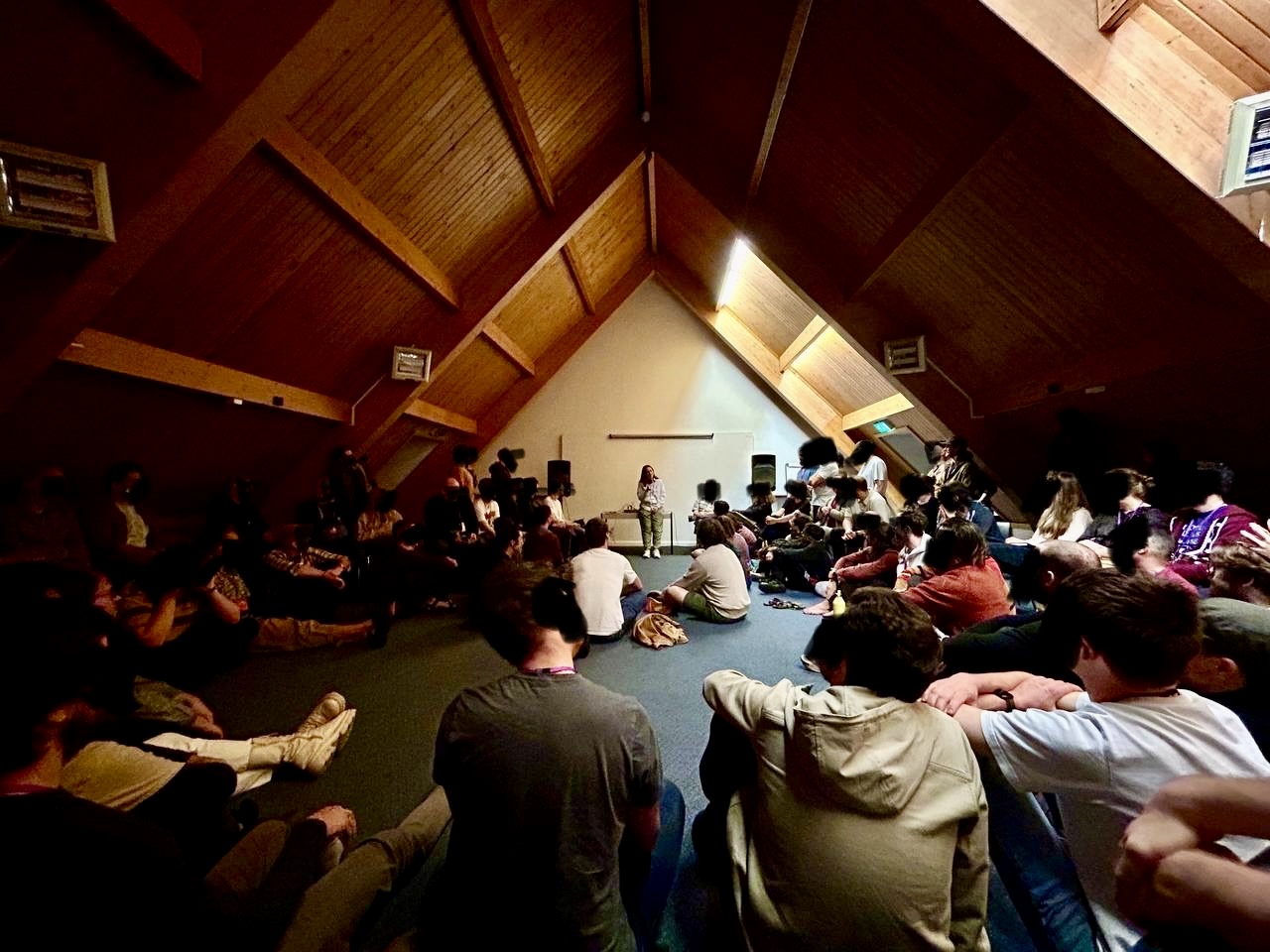
I’ve never had a very high sex drive so I wasn’t exactly chasing people down, but I slept with half a dozen or so new people over about a year, mostly only once with each person. Some in my hometown of Bristol and some at my first, absolutely rollicking BiCon.
I remember thinking that you can learn a lot about a person by sleeping with them (IE you don’t have to know them very well first, which really broke my old way of doing things) but you learn even more about yourself. Before this point I had slept with just 4 people, and now I had slept with 4 or 5 more in quick succession.
I slept with them all just once because in the main, the one time was ok but not enjoyable enough to repeat, for whatever reason. It was exciting though.
In many ways it made me more insecure about sex as it exposed many of my naive assumptions about people and how they operate, and especially my assumptions about myself and how I operate. My preferences were suddenly under a spotlight in a way they hadn’t been before, which made me insecure about them. I also realised just how much I relied on the other person to glean implicit knowledge from me to make sexual encounters go well. I was clearly naive and lazy when it came to sexual encounters. A bitter pill to swallow in one’s late twenties.
A big change happened when myself and my partner eventually had several long talks about our relationship. It felt ground-breaking. It seemed to be the first time we had managed to talk with any real truth. I don’t remember who initiated it (I assume it was me), or any details at all, but we agreed to break up (and remain friends). So we did and I moved out to a place not far up the road and my ex partner helped me in lots of ways with moving in.
It was only much later that I fully understood his advice and actions and feelings during that time, because he had some skills that I didn’t back then, and there was also still much unspoken between us that eventually came out.
Anyway I now lived “alone” for the first time, with 9 strangers in the other bedrooms of the large ex-Bed&Breakfast house that we lived in. This was about a year or a year and a half after starting to read about polyamory, and was the start of sleeping with some people on a more regular basis and also being non-monogamous throughout. It was one of the happiest times of my life, and like all times in life, was also one where I cried the hardest and lived with some of the darkest demons too.
Ok time to read the diaries and see how accurate my memories are!









Leave a Reply