

Like everything, TPOT (This Part Of Twitter), isn’t actually anything. It isn’t a thing. It isn’t one thing. It isn’t one person. It isn’t one community. It isn’t one set of values. It’s isn’t a thing you can define. It is particularly nebulous, in a world of nebulous-but-patterned non-things. This nebulosity is encoded right there in the name. “This” part of twitter. There is no “this” part, separate from “that” part, definable either in the positive or the negative. It’s just this. It’s just here.
Twitter’s very nature is nebulous. The connections between people and conversations are loose, ever-shifting. No one person’s experience of twitter is the same as another person’s, thanks to the fact that each user follows a different combination of accounts, and on top of that we must add the vagaries of the algorithm. Even two accounts who follow the same people will see different tweets, because of user input, interactions, time of day, and the mysterious machine that’s trying to optimise the feed.
So please, there is no defining a thing that is unique for every person and unique in every moment.
What then, is the pattern? For there is pattern here. There are clusters. There are norms. There are sentiments. Something here needed naming, even if it was a non-name. What is it?
Well, all we can do is gesture. “That cloud looks like a horse”, “that cloud looks like a dragon”.
This scene looks like a comedy show writer’s room. It looks like a performance art piece. It looks like a science experiment. It looks like an earnest quest. It looks like a community of mutual aid. It looks like an internet edge lord coffee house. It looks like an actual answer to the postmodern question. It looks like a universe in a grain of sand.
It looks like people. It behooves us to look at what kinds of people are clustering in this pattern.
In general, this pattern is held together and given shape by people who can tolerate the level of ambiguity already outlined. There are actually not many such people, and it is a skill that requires cultivation.
Many people declare that this scene will die, will self destruct, must end. Those are people who cannot tolerate ambiguity. They have found what they believe to be a fatal flaw and declare doom, but so far they have been wrong, as this scene which has existed for more than a decade still remains. The nay-sayers and the rigidity enjoyers simply leave. They cannot understand why other people would ever stay. But stay they do.
The ambiguity and complexity enjoyers stick around.
There are certain sub-types of this group, and I will name a few.
Some are seekers. Seekers are earnest, humble people who are suffering. The suffering spurs the seeking. The seeking yields fruit only when coupled with humility and willingness to grow. A desperate urge to reduce the suffering is also useful, but not required. Motivation to seek truth is the key.
At a certain point of maturity, it is seen by these folks that nebulosity is an expected facet of life. It is the way things are. They have learned that things cannot actually be abstracted and pinned down, no matter how much we want them to. These people can tolerate ambiguity because they have learned that it actually is the way things are, and their experience confirms it. Many of them arrived by reading blogs about this very facet of human experience.
Some others are naturals in ambiguity, they see no need to pin things down too tightly. They may have a lack of anxiety, and never needed to pin them down in the first place. They may have lived experience with the play of such things, and revel in the fuzzy lines. Their life has naturally taught them this. They might be artists, or highly intuitive, natural magicians, or disabled in some way, or those who simply adore mystery. These natives are comfy here.
Then there’s the grifters. Almost always deeply wounded, they are those whose goals are well suited to ambiguity. Driven, smart and traumatised, they are narcissists, sociopaths, liars or self-interested performers. They are ready to learn the hand signals and subroutines of anywhere in order to slip in undetected to enact their nefarious schemes. They need cover to achieve their goals. They need time to do their work. They need to last undetected or at least un-exorcised to get anything done. Ambiguity is excellent for this. On more than one deep level, they are fakers.
There are peculiarities to such a crowd. High openness & trauma seem to be the near-universals. Some have open wounds, while some have healed. Most are under-socialised. Most are heady and disembodied (at first). Being in a cult in the past is surprisingly common. Having neglectful or abusive parents, also common. The computer raised us. We are also outcasts, atypical, misunderstood. And of course we are wordcels. Linguistic and concept enjoyers. High earnestness helps to protect us a little from the fakers. We have switched from trying to win (finite game) to trying to keep going (infinite game).
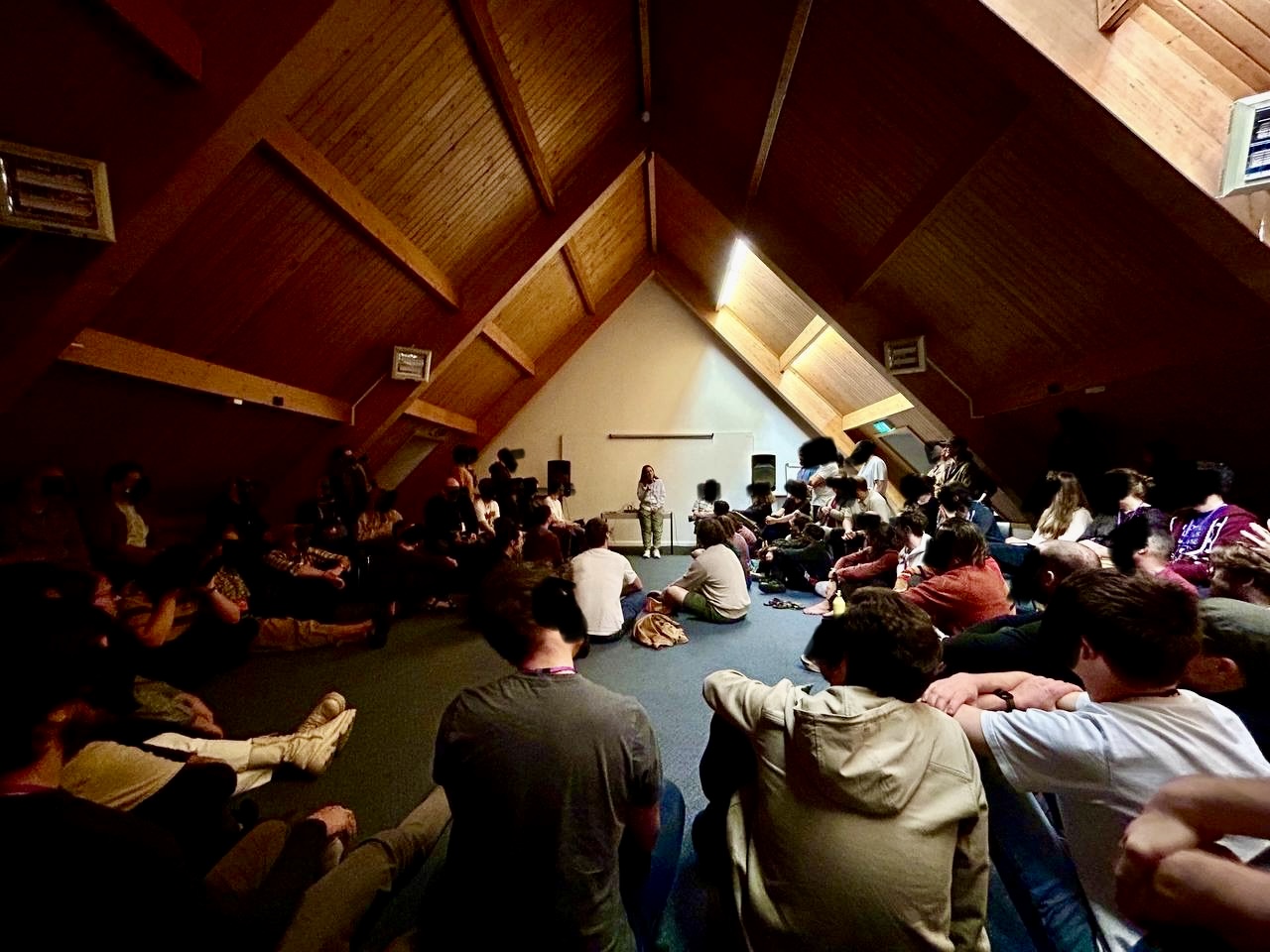
This is our cast and crew. This is our stage.
TPOT is NOT a thing. It’s not a group. There are no leaders. There are norms, but nobody set them, at this point they just sort of seem obvious. TPOT is a community of people, growing and changing, but it is also just dry words on a screen. If 4chan is the bacterial layer, TPOT is the mycelium.
These are my words, this is my pot, this is my scene, these are my patterns. What people and patterns and behaviours have you noticed, anon?








Leave a Reply